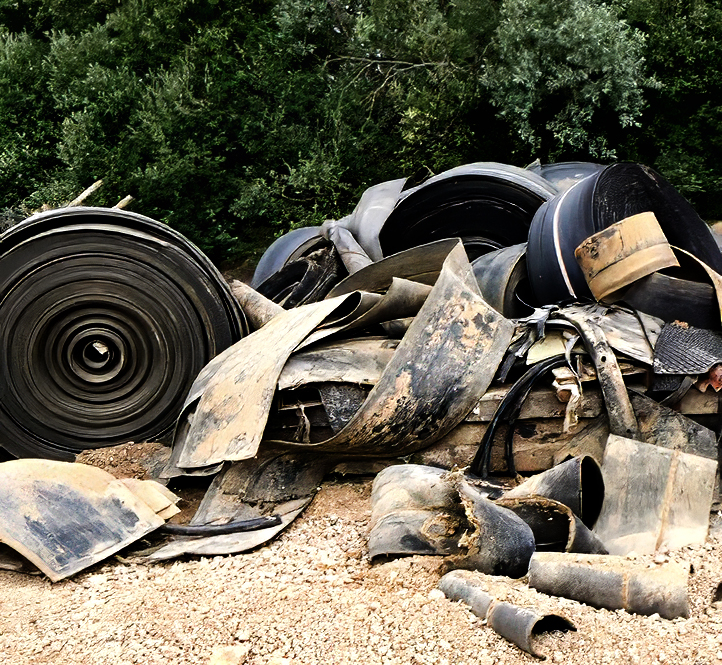



Conveyor belt disposal – a forgotten cost
In buying decisions, it is often common to focus solely on the purchase price of a product or service. As a result of the market saturation by manufacturers in Asia, predominantly China, this criterion certainly applies also to rubber conveyor belts. However, the initial cost represents only a fraction of the total spending over the belt’s lifecycle. Unmeasured or ‘incidental’ expenditure that does not form part of the cost calculation can turn what appears to be an economical choice into an extremely expensive one.
The differences in the selling price, performance and longevity of conveyor belts of apparently the same specification can be dramatic. Belts imported from Asia can be as much as 50% lower in price compared to the leading quality brands in Europe, such as Fenner Dunlop in the Netherlands and Contitech in Germany. In Fenner Dunlop’s case, for example, field surveys and laboratory testing consistently confirm that their belts continue to run with minimal intervention for up to 500% longer than those of the vast majority of competitors. This means that one good quality belt can outlast as many as five lower quality ‘competitively priced’ belts, which more than compensates for the lower prices of their competitors when compared on the basis of Total Cost of Ownership (TOC) methodology.
Easily forgotten
When adding to the price paid for a replacement conveyor belt, the most common costs of a belt’s operational life cycle are the removal of the old belt and the fitting of the new one; ongoing emergency repair and maintenance costs; and the hugely expensive lost production (downtime) costs caused by those unscheduled stoppages. However, a significant cost that is often forgotten is the disposal of the used belt. Although not always easy to calculate because of variables such as size/weight, location, handling and transportation, plus the ultimate choice of recycling or waste disposal, it nevertheless needs to be done. Market research indicates that the collection and recycling/disposal costs for a belt with an estimated total weight of approximately 4 tons would typically range from €400 to €1,200 for processing/recycling, plus transportation and loading costs, depending on location and accessibility.
When measured in isolation, the incidental costs relating to a single conveyor belt, including the cost of disposal may not seem a particularly huge but with short life ‘economy’ belts the costs are typically incurred three or more times compared to using a longer-lasting, high quality belt so it is certainly worthwhile making this argument in a CAPEX application to senior management to justify making Total Cost of Ownership the primary selection criteria rather than price.