


Oil resistance standards and test methods
Oil resistance – Standards
Although test methods do exist, at present there are no actual international quality standards relating to performance. This makes it even more important to look for actual references to the test methods used by the manufacturer/supplier.
Oil resistance – Test methods
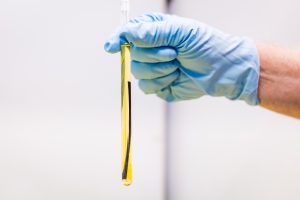
There are two recognised test methods, both of which involve almost identical test procedures. These are ISO 1817 (2015) and the comparable but slightly less elaborate American ASTM ‘D’ 1460. Samples of rubber (eg. 100mm X 1.6mm X 2mm strips for the ASTM test) are fully immersed in the relevant test liquid for a specific period of time. The duration of immersion and the temperature at which the liquid and sample are kept can be varied but the most common is either 3 or 7 days at ambient or 70°C. The ambient temperature of the environment is controlled within specific guidelines. Changes in the geometry and dimensions of the specimen caused by absorption are then measured when the samples are removed.